


A Renaissance Masterpiece: Michelangelo's David
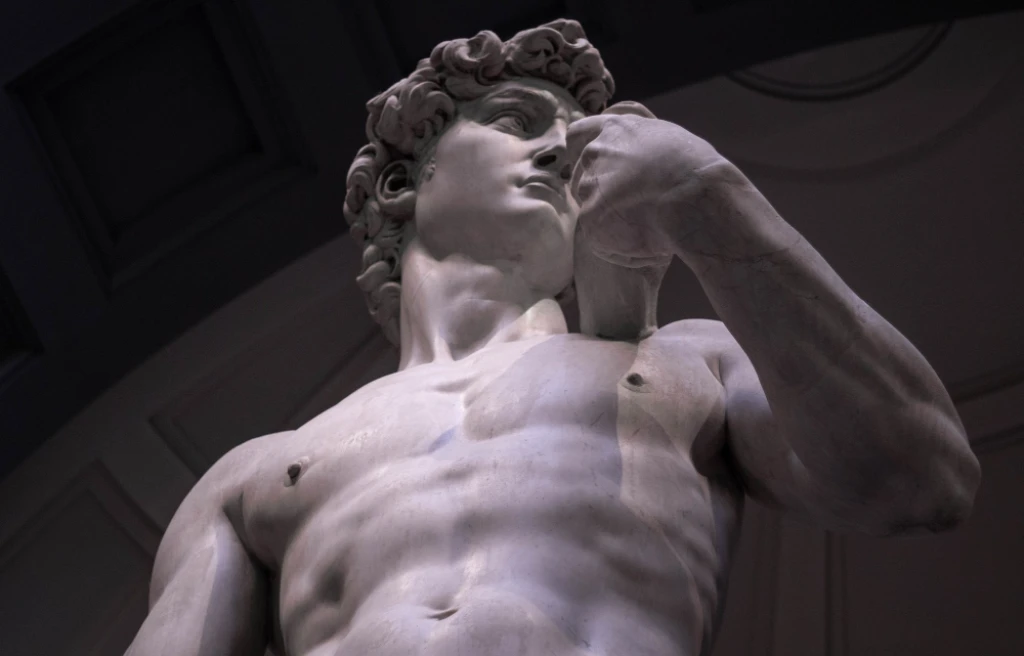
Michelangelo Buonarroti, who lived between 1475 and 1564, is one of the most important artists of the Italian Renaissance. In addition to sculpture, he also produced works as a painter, architect, and poet. With such talent, he must have eventually made his father proud, who had once said, “A Buonarroti will not make a living solely with his hands.”
In 1501, Michelangelo was commissioned in Florence to create a statue for Santa Maria del Fiore, also known as the Duomo. Initially, it was planned that the work would be placed in a high location outside the cathedral. However, after approximately three years of work, the 5.17-meter-tall Davut, completed in 1504, attracted much greater interest than originally planned.
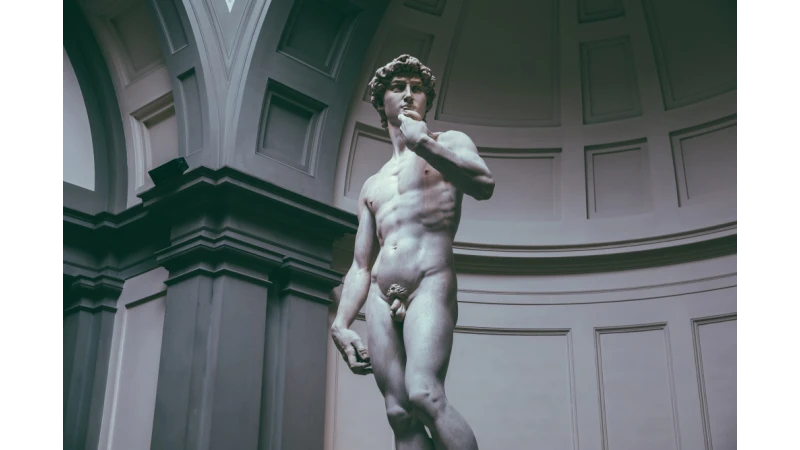
A committee composed of prominent artists of the time was formed to decide where the work should be placed. The committee, which included Leonardo da Vinci and Botticelli, decided that Davut should be placed in front of the Palazzo Vecchio in Piazza della Signoria, one of Florence's political centers, instead of at the Duomo.
Placed here in the spot where Donatello's statue of Judith and Holofernes stood, Davut gradually became one of the symbols of Florence's power and independence. It is also a beautiful example for understanding why the Renaissance emerged so strongly in Florence.
Davut and Goliath
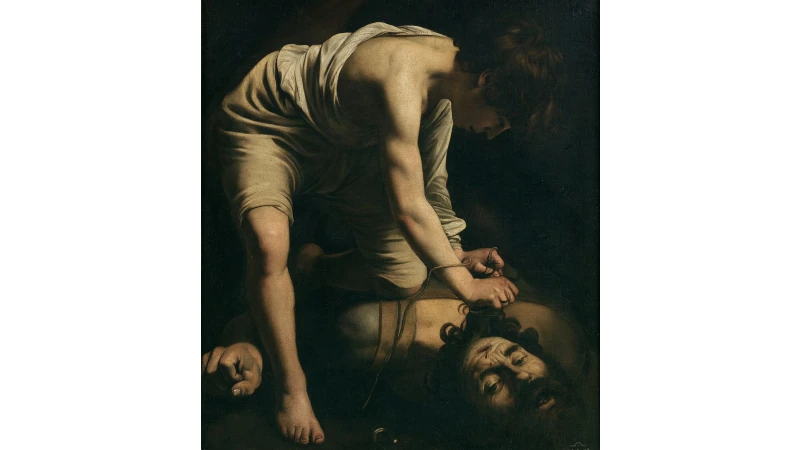
The statue deals with the story of Davut and Goliath, which is also told in the Torah and the Bible.
According to the story, in the war between the Israelites and the Philistines, young Davut faces the giant warrior Goliath. Against Goliath, who was physically much stronger than him, Davut's weapon was only a sling and a few stones. Davut hits Goliath in the forehead with a thrown stone and manages to defeat him.
One of the most important details that makes Michelangelo's work special is that it shows Davut not after victory, but immediately before the struggle.
We do not see Goliath's head or the outcome of the battle. Instead, we look at the determination and tension on Davut's face. The sling extending from behind his left shoulder and the stone in his right hand give clues about the struggle that will take place shortly.
When you look at the statue, you are actually looking not at a moment of victory, but at those few seconds just before victory.
The seemingly flawless marble block
Another interesting story about Davut concerns the marble used in its creation.
The marble block used by Michelangelo had previously been started by two different artists, but the work remained unfinished. This block, which lay unused for years, could have been a serious handicap for a sculptor.
However, Michelangelo brought forth a single-piece human figure taller than 5 meters from this marble.
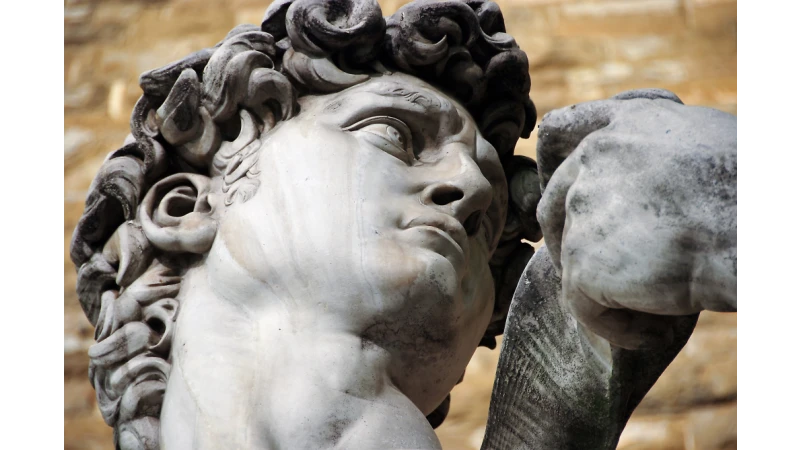
Moreover, as you get closer to the details of the work, your admiration grows even more. The hair, veins, muscles, hands, fingers, and facial expression were crafted with great delicacy.
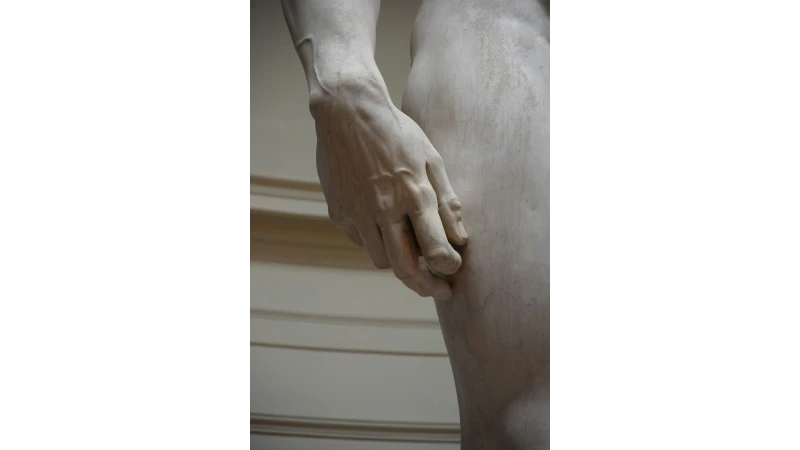
Michelangelo's interest in human anatomy is clearly evident here. The artist, who examined classical statues from a young age, placed the human body at the center of his works and reflected his knowledge of anatomy into his studies.
It is also striking that Davut's hands and head are large relative to his body. It is thought that this was a conscious artistic choice and may be related to the initial plan to place the statue at a high point.
Where is Davut today?
After being placed in Piazza della Signoria in 1504, Davut remained there for approximately 370 years. However, being outdoors left the work vulnerable to weather conditions and various damages.
In 1873, the original statue was moved to the Galleria dell'Accademia for preservation. Today, Michelangelo's original Davut is exhibited here.
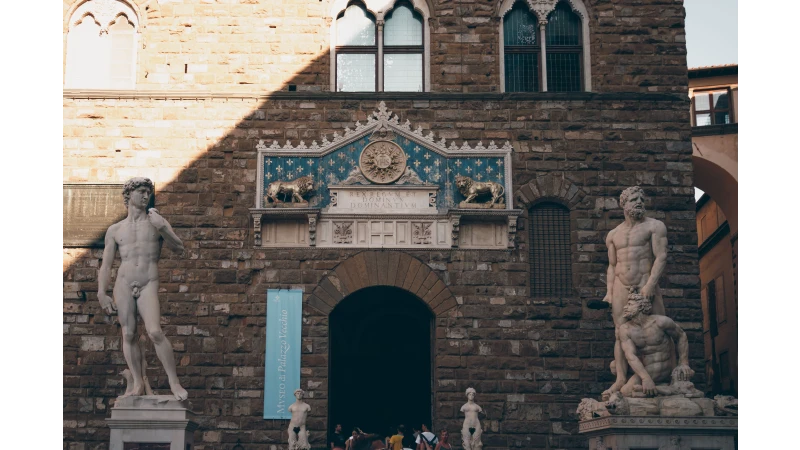
The Davut we see in Piazza della Signoria is not the original, but a copy. Another copy of Davut can also be found at Piazzale Michelangelo, which offers panoramic views of Florence.
Therefore, there are actually three different locations for those who want to see Davut in Florence: to see the original, visit the Galleria dell'Accademia; to see the statue's connection to Florence's political history, visit Piazza della Signoria; and to see Davut while overlooking the city, visit Piazzale Michelangelo.
In front of a masterpiece
The Davut Statue is considered one of Michelangelo's most important works, along with his Pietà in Rome, and is recognized as one of the most famous works of Renaissance sculpture.
When the statue was completed, Michelangelo was still in his late twenties. After the great fame Davut gained, the artist was summoned to Rome by Pope Julius II and later created the famous ceiling frescoes of the Sistine Chapel.
Michelangelo died in 1564 at the age of 88. His strong bond with Florence continues today through his grave at the Basilica of Santa Croce.
Even seeing Davut from a distance is impressive. But as you approach, the work takes on an entirely different character. You can see almost all the details of the human body within the marble.
Undoubtedly, there are still extremely talented artists and significant works today. However, the fact that many great names like Leonardo da Vinci, Michelangelo, Botticelli, Raphael, and Donatello lived during the same period inevitably inspires a different kind of admiration.
It seems as if the world's most talented artists had agreed among themselves to be born in the same era, leave their masterpieces, and then depart from this world...
Michelangelo's Davut is reason enough to visit Florence.
🇮🇹 Are you ready for a journey to the heart of the Renaissance?
To explore Davut and Italy's iconic structures firsthand, you can examine our detailed routes by clicking on our Italy Tours .